Daniel LeBlanc
All the Light We Cannot SeeDaniel LeBlanc is a locksmith, devoted father, and maker of miniature buildings whose skill at fitting parts together cannot shield his family from the disorder of war. He teaches Marie-Laure LeBlanc to move through a world she cannot see, carries a diamond whose identity he cannot verify, and leaves clues in a model that she will only understand after his arrest. His disappearance becomes both a personal loss and an unanswered question: the surviving records establish that he was imprisoned and sent to forced labor, but not what ultimately happened to him.
Identity and Work
Daniel works as principal locksmith for the Muséum national d’Histoire naturelle. His profession gives him a practical intimacy with keys, locks, and the spaces they open; outside work, he applies the same patience to miniature houses and cities. The museum’s tools and architectural measurements are among the objects that later make his captors suspicious, but for Daniel they are also part of his trade and his craft as a model-maker.
He is an exacting worker, but his care for his daughter is expressed through routines rather than grand declarations. After Marie-Laure loses her sight, he makes her small models and patiently helps her learn to navigate. In one recurring refuge from the disorientation of rooms that seem to pitch and doors that strike her face, she lies in bed beneath her quilt while he sits beside her, smoking and working on a model. The small hammer’s taps and the rasp of sandpaper give their quiet companionship a steady rhythm. When she fears that a curse may be responsible for her misfortune, he insists that curses do not exist, offering luck—good or bad—as a less absolute explanation.
Fatherhood and Departure from Paris
Daniel’s care takes the form of instruction as well as comfort. Six mornings a week, he wakes Marie-Laure before dawn, dresses her, and, if there is time, has her try to tie her own shoes. They drink sweetened coffee together in the kitchen. At six forty she retrieves her white cane, loops a finger through the back of his belt, and follows him down three flights of stairs and along six blocks to the museum. The route depends on his guidance, but the repeated journey is also practice: an ordered sequence she can learn and carry with her.
When they flee Paris, Daniel takes his daughter west with a group of travelers in an old furniture lorry. She rides among a dozen people under a waxed canvas tarp as the truck crawls along, and tries to imagine that the journey is only a test and that they will soon return to the familiar apartment. That imagined return is full of ordinary details: the model on its bench, the sugar bowl on the kitchen table, and the coffee and bath her father would prepare. The scene makes the cost of departure concrete: safety requires leaving the small daily world he had built around her.
Daniel also carries a secret responsibility from the museum. Its director has divided the Sea of Flames and three decoys among four carriers, sending them in different directions so that none can know which stone is real. One decoy remains at the museum; Daniel carries another in a heavy linen bag concealed beneath the lining of his woodworking case. He tells himself that the stone cannot be genuine: surely the museum would not entrust a tradesman with a diamond of one hundred and thirty-three carats. Yet its blue glow and strange coldness unsettle that certainty. His doubt matters because he does not know whether he is protecting a valuable original or only a reproduction, while still having to behave as though the danger is real.
Saint-Malo, the Model, and the Telegram
In Brittany, Daniel completes a model of Saint-Malo for Marie-Laure. It is unpainted and imperfect, made from several kinds of wood, and still missing details, but it is usable: the island’s irregular polygon and encircling ramparts are represented, with all 865 buildings in place. The miniature is not simply a likeness. It offers his blind daughter a way to study the city through touch and to find her bearings if she needs to.
A telegram dated 10 December 1940 orders Daniel to return to Paris at the end of the month and to travel securely. The instruction gives him no clear answer about what security requires. He turns over the possibilities: whether to bring the stone, whether to leave Marie-Laure behind, and whether to travel by train or by some supposedly safer means. He even wonders whether the telegram truly came from the museum director. After more than two weeks of uncertainty, he buys a single-passenger ticket for the morning train to Rennes and then onward to Paris. He expects to return to work and, a week later, travel back to Brittany to collect his daughter. The plan separates father and daughter at precisely the moment when his protection of her and his museum duties are pulling in opposite directions.
Arrest and Imprisonment
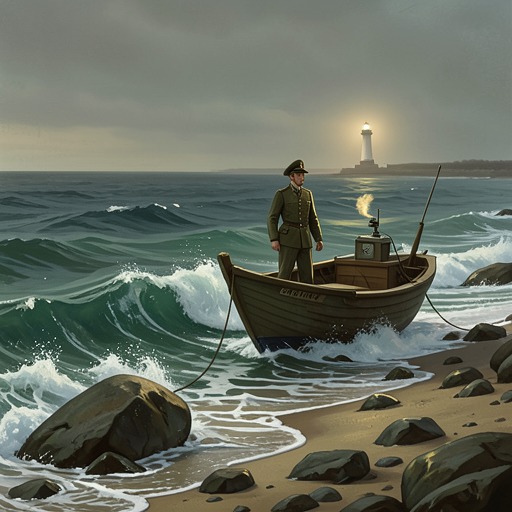
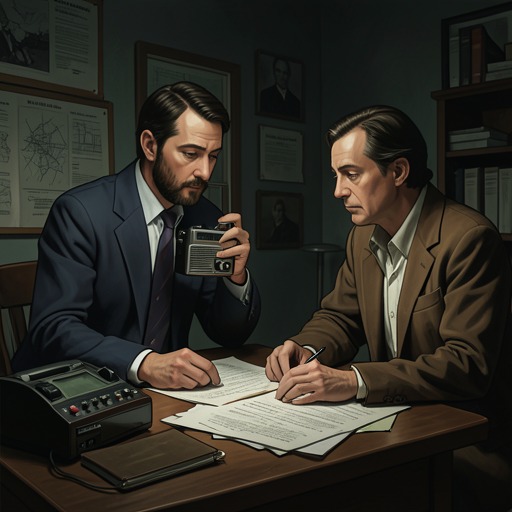
Daniel is seized outside Vitré, hours from Paris. Two plainclothes policemen bundle him off a train while the other passengers watch. French interrogators question him first; an hour later, the interrogators are German. They display his notebook, woodworking case, and key ring, counting seven skeleton keys and asking what the keys open, how he uses his tiny files and saws, and why his notebook contains architectural measurements. Daniel answers that the measurements are for a model for his daughter and the keys are for the museum where he works. The ordinary evidence of his occupation is recast as grounds for suspicion.
Later, two French policemen arrive at the home in Saint-Malo, claiming to be acting at the request of the Natural History Museum in Paris. They tell Marie-Laure, Etienne LeBlanc, and Madame Manec that Daniel has been convicted of theft and conspiracy, and that prisoners can be forced to labor whether or not a sentence requires it. Their official language does not reassure Marie-Laure. When she hears questions about her father and the letters he may have smuggled out, she remembers his warning that everyone is looking out for himself. She insists that her father is not a thief, while Madame Manec squeezes her hand. The encounter shows how the charge against Daniel reaches beyond the prison: it puts his daughter under questioning and tests whom the household can trust.
Letters, Legacy, and Uncertain Fate
From imprisonment, Daniel sends letters to Marie-Laure. One describes parcels reaching him months apart, the limited possessions he is allowed to keep, and the cardboard he and the other prisoners manufacture all day. He recalls having been the one who carried the keys; now he hears keys jangling when the guards come for the prisoners, and finds his own pocket empty. The changed meaning of the keys condenses his reversal from a working man entrusted with access to a prisoner subject to other people’s locks. He writes that he dreams of the museum, remembers his daughter’s birthdays, and tells her to thank Etienne for reading the letter aloud and the person carrying it onward.
His last surviving instructions also turn a familiar object into a puzzle. Daniel tells Marie-Laure that if she wants to understand, she should look inside Etienne’s house, inside the house. She repeats the message and tries to discover what he means. On 6 August, while questioning about her father and his possessions brings the danger of his absence into immediate focus, she climbs to her room and searches the miniature city. She finds the model of Number 4 rue Vauborel, presses the recess in its front door, and works through its concealed construction: she turns the chimney, removes the roof panels, and follows a succession of little doors. The model Daniel made to help her navigate becomes a container for a hidden secret, and his trust in her judgment survives in the form of an instruction she must solve for herself.
Daniel’s fate remains unresolved. Marie-Laure and Etienne later hire an investigator, spend thousands of francs, and examine German documentation. They confirm that Daniel was a prisoner at Breitenau labor camp in 1942 and find a record by a camp doctor at a subcamp in Kassel stating that a Daniel LeBlanc contracted influenza in early 1943. They establish no further account of his life or death. That evidentiary limit gives his final letters their double weight: they preserve his voice and his concern for Marie-Laure, but cannot provide the certainty she and Etienne seek.